
Why Ganga Water Never Spoils – The Scientific Mystery of the Ganges
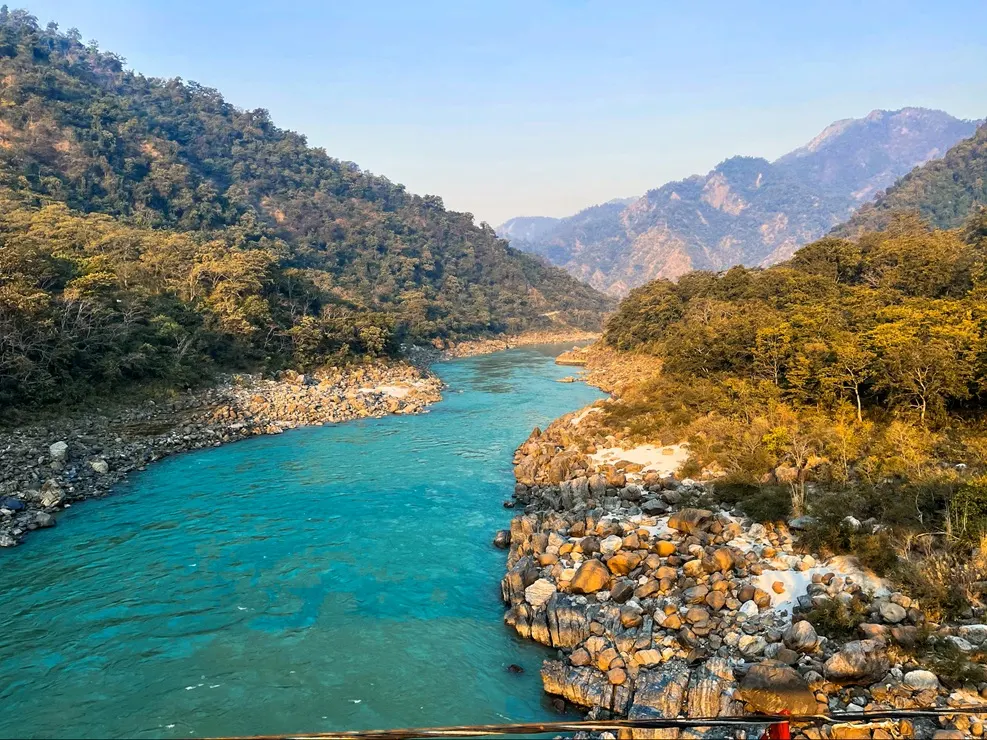
For centuries, people across India have believed that Ganga Jal, the sacred water of the Ganges River, possesses extraordinary properties. One of the most fascinating observations is that Ganga water stored for years often remains fresh and clear, unlike ordinary river water which typically spoils over time.
Devotees store Ganga Jal in temples and homes for religious rituals, believing it carries divine purity. Interestingly, this belief is not based only on faith. Scientists, microbiologists, and environmental researchers have also studied the river to understand why Ganga water behaves differently from most natural water sources.
The answer lies in a unique combination of Himalayan origin, natural microorganisms, oxygen levels, and the ecological characteristics of the river system.
The Himalayan Origin of the Ganga
The story of Ganga water begins in the high Himalayas at the Gaumukh glacier, the traditional source of the Bhagirathi River which later becomes the Ganges.
This glacier lies in the Gangotri region of Uttarakhand and is formed by melting snow and ice from the surrounding mountains. According to geographical research about the Gaumukh glacier and the source of the Ganges, the river originates from glacial meltwater at an altitude of around 4,000 meters.
Because this region is remote and sparsely inhabited, the water begins its journey in an environment largely free from human pollution.
Water collected from the upstream Himalayan region near this sacred origin — such as the preserved sacred water offered by Poorthi retains the characteristics of its pristine source before the river flows through populated plains.
High Levels of Dissolved Oxygen
Another factor scientists often discuss when studying the Ganga is its unusually high dissolved oxygen levels.
Research analyzing water quality in the Ganga river system (https://nmcg.nic.in/pdf/publication/water_quality_report.pdf) indicates that parts of the river maintain higher oxygen levels compared to many other rivers.
Oxygen-rich water makes it difficult for harmful bacteria to multiply rapidly. This natural condition helps slow the decay process that normally causes stored water to spoil.
The turbulence created by the river’s fast Himalayan flow also increases oxygen mixing, contributing to this phenomenon.
The Role of Bacteriophages
One of the most widely discussed scientific explanations involves bacteriophages.
Bacteriophages are microscopic viruses that infect and destroy bacteria. Studies examining bacteriophages present in the Ganges river ecosystem suggest that these natural viral agents can help regulate harmful bacterial populations in the water.
Because bacteriophages attack bacteria responsible for decay, they may contribute to the unusual stability sometimes observed in stored Ganga Jal.
This biological mechanism has fascinated scientists studying the river’s microbial ecology.
Unique Microbial Ecosystem
Apart from bacteriophages, the Ganga also contains a complex microbial ecosystem.
Research on microbial diversity in the Ganga River basin indicates that the river hosts a diverse range of microorganisms that interact with each other in ways that affect water quality.
Some microorganisms suppress the growth of harmful bacteria, helping maintain the natural balance of the river ecosystem.
These interactions create a self-regulating microbial environment rarely found in other river systems.
Mineral Composition from Himalayan Rocks
As the river flows through the Himalayas, it passes through layers of glacial sediment, rocks, and minerals.
These geological formations release trace minerals into the water. Studies examining Himalayan river chemistry and sediment transport (https://www.usgs.gov/publications/himalayan-rivers-and-global-sediment-flux) show that mountain rivers often carry mineral-rich water due to the erosion of rock formations.
These minerals influence the chemical composition of the river and may affect microbial activity within the water.
This natural mineral balance is another reason why water originating from the upper Himalayan region behaves differently from ordinary river water.
Spiritual Beliefs and Cultural Significance
While science offers several explanations, the spiritual importance of Ganga Jal remains deeply rooted in Hindu tradition.
For millions of devotees, the Ganga is not just a river but Maa Ganga, a sacred embodiment of divine purity and spiritual cleansing.
Because of this belief, Ganga Jal is used in numerous religious practices including:
- Daily puja rituals
- Temple ceremonies
- House purification rituals
- Weddings and festivals
- Last rites and sacred offerings
The deeper cultural meaning of this sacred water is explored in our article explaining why Ganga Jal is considered sacred
Why Many Families Store Ganga Jal for Years
It is common for families across India to keep small bottles of Ganga Jal in their homes.
Even after years of storage, the water often remains clear without developing a foul odor. This phenomenon has been observed for generations and continues to inspire both devotion and scientific curiosity.
For those who cannot travel to the Himalayas themselves, authentic sacred water sourced from the upstream Himalayan region can still be obtained from trusted sources such as Poorthi.
Science and Faith Meet in the Ganga
The mystery of why Ganga water resists spoilage represents a rare intersection of science, nature, and spirituality.
Researchers point to several contributing factors:
- Bacteriophages that destroy harmful bacteria
- High dissolved oxygen levels
- Mineral-rich Himalayan meltwater
- Complex microbial ecosystems
At the same time, centuries of spiritual tradition have regarded the Ganga as a river of purification and divine blessing.
Together, these perspectives help explain why the Ganga continues to be revered as one of the most sacred rivers in the world.
Conclusion
The enduring freshness of Ganga water is both a scientific curiosity and a spiritual symbol. Originating in the pristine Himalayan glaciers and flowing through centuries of tradition, the river carries with it a remarkable ecological balance.
Whether viewed through the lens of science or devotion, Ganga Jal remains a powerful representation of purity, faith, and the natural wonders of the Himalayas.
For those seeking authentic sacred water from the Himalayan source, Poorthi preserves the spiritual essence of the river so that households can keep the blessings of Maa Ganga close to their daily rituals.